


- Moderators needed to turn each panel's objectives, participant backgrounds, and preparation-call conversations into structured discussion guides.
- The next step was quality, not just speed: recommendations needed to be more specific, grounded in source material, and better at surfacing insights from the conversations.
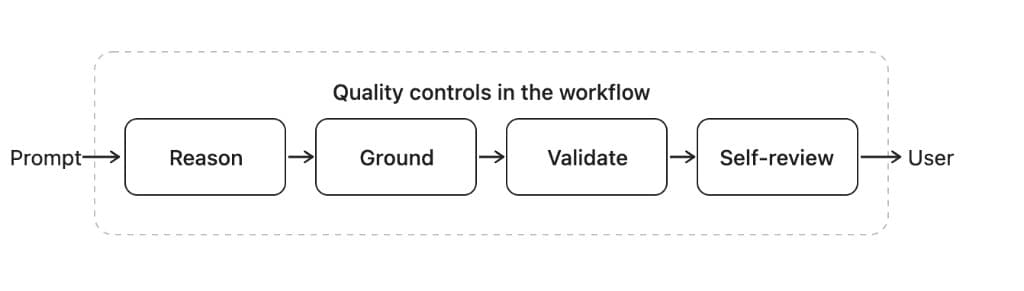
Zora Digital built an AI workflow platform that helps moderators prepare for panel discussions. It turns the panel's objectives, participant backgrounds, and preparation-call conversations into structured discussion guides. The team did not rely on a bigger model. They added checkpoints so the AI could reason, validate conclusions against source material, and review its work before it reached the user. Later stages received the underlying transcript and direct quotes, so moderators could see what was recommended and why. A verification layer checked quoted references and speaker attribution against the original transcripts. Quality controls in the workflow run from the prompt through reason, ground, validate, and self-review before the result reaches the user.
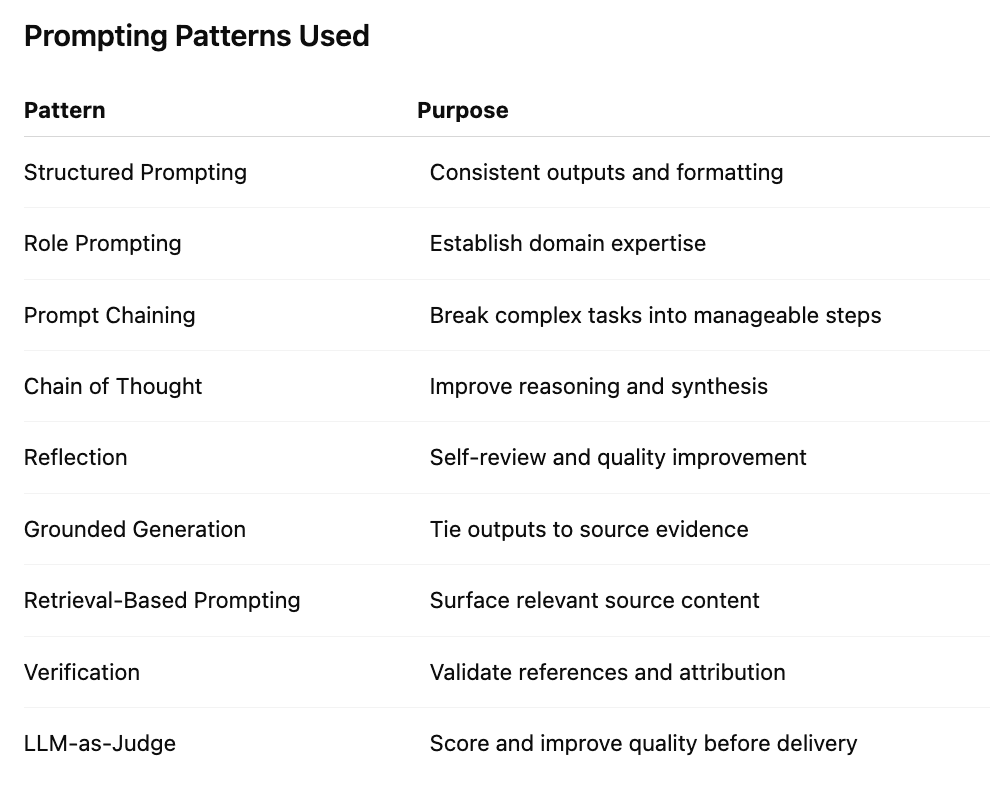
| Pattern | Purpose |
|---|---|
| Structured Prompting | Consistent outputs and formatting |
| Role Prompting | Establish domain expertise |
| Prompt Chaining | Break complex tasks into manageable steps |
| Chain of Thought | Improve reasoning and synthesis |
| Reflection | Self-review and quality improvement |
| Grounded Generation | Tie outputs to source evidence |
| Retrieval-Based Prompting | Surface relevant source content |
| Verification | Validate references and attribution |
| LLM-as-Judge | Score and improve quality before delivery |
- Tasks that previously took 9 to 17 hours of skilled preparation could be completed in about 1.5 to 2 hours, a reduction of nearly 75%.
- Recommendations were more specific and grounded in the source material, and moderators could see why a recommendation was made.